
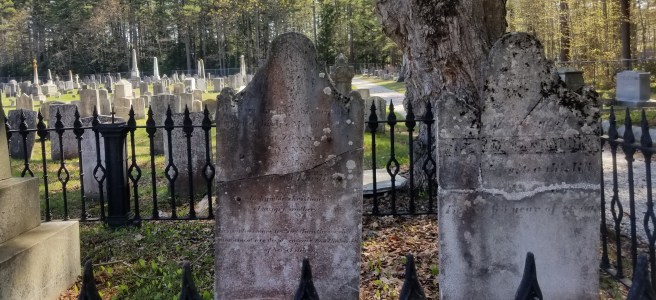
I have seen everything that is done under the sun, and behold, all is vanity and a striving after wind —Ecclesiastes 1:14
The first chapter of Ecclesiastes confronts the reader with the harsh reality of mankind’s place in this world in which we live. The Preacher sets this before us in poetic form, allowing the lyrical rise and fall of the verses to mirror the imagery of incessant repetition, both in nature and in our futile attempts at lasting significance. He begins with a rhetorical question, setting the context by his choice of words.
What does man gain by all the toil
at which he toils under the sun? —Ecclesiastes 1:3
“The word ‘man’ is the word ‘adam’ in Hebrew.” This “leads us back to Genesis and reminds us that the fall of Adam is never far from Pastor Solomon’s mind.” And “the repetition of the word toil—‘all the toil at which he toils’—reminds us of Adam’s curse.”[1]
cursed is the ground because of you;
in pain you shall eat of it all the days of your life;
thorns and thistles it shall bring forth for you;
and you shall eat the plants of the field.
By the sweat of your face
you shall eat bread,
till you return to the ground,
for out of it you were taken;
for you are dust,
and to dust you shall return. —Genesis 3:17b–19.
The context of this meditation is life in “the fallen world that both the secular and nonsecular share as sinners under God’s curse.” This is life “under the sun.” And yet, Phillip Ryken sees in this phrase a glimmer of hope, an evangelistic purpose even, in the Preacher’s emphasis on this expression by which he “describes the absurdity and futility of work and wisdom and pleasure and everything else.”
In other words, this is what life is like when we view it from a merely human perspective, when we limit our gaze to this solar system, without ever lifting our eyes to see the beauty and glory of God in heaven. If that is all we see, then life will leave us empty and unhappy. But when we look to God with reverence and awe, we are able to see the meaning of life, and the beauty of its pleasures, and the eternal significance of everything we do, including the little things of everyday life.”[2]
The answer to the question is, of course: nothing. If we keep our eyes fixed only on this earthly life, we gain nothing from all our efforts and hard work. “The word gain conveys the idea of something left over, remaining at the end. . . This is what’s at stake in the question of verse 3: at the end of my life, what will the surplus be? What will I leave behind that will count as a lasting monument to all my effort? . . . I leave only one thing behind, and that’s the earth I used to live on, remaining right where it was when I first arrived, only now it spins without me.”[3]
To make his point, the Preacher turns to the cycles of nature, continuing on as they have from the beginning of creation, regardless of the accomplishments or failures, efforts or indolence of generation after generation after generation of humans.
A generation goes, and a generation comes,
but the earth remains forever. —Ecclesiastes 1:3–4
On July 20th, 1969, the Apollo 11 mission successfully landed a lunar module, the “Eagle,” in the Sea of Tranquility, and Astronauts Neil Armstrong and Buzz Aldrin walked on the surface of the moon. And yet, “The sun rises, and the sun goes down, and hastens to the place where it rises” (1:5). Snaking across the northern borders of China is a wall originally meant to halt invading armies, built of wood, earth, and stone, stretching for 13,170.70 miles, visible even from outer space, and yet, “The wind blows to the south and goes around to the north; around and around goes the wind, and on its circuits the wind returns” (1:6). From before the beginning of recorded history, countless wars have been fought using increasingly lethal and barbaric weaponry, resulting in numberless lives lost, on every continent and upon every ocean on our planet, and yet, even still, “All streams run to the sea, but the sea is not full; to the place where the streams flow, there they flow again” (1:7).
The earth, in general, is largely the same as on the day Noah stepped out of the ark. There has been nothing, as a rule, to alter the seasons and rhythms of this planet. God’s covenant promise to Noah holds firm. Our orbit around the sun remains constant, rivers and streams may change course, but they still run to the sea, Mountains rise and fall so gradually we can barely observe the differences, but the mass and circumference of the earth is the same. “There is no reason to assume that individuals should “gain” from their toil when creation as a whole does not.”[4]
The Preacher now turns to the cyclical repetition of life from generation to generation.
All things are full of weariness;
a man cannot utter it;
the eye is not satisfied with seeing,
nor the ear filled with hearing.
What has been is what will be,
and what has been done is what will be done,
and there is nothing new under the sun.
Is there a thing of which it is said,
“See, this is new”?
It has been already
in the ages before us.
There is no remembrance of former things,
nor will there be any remembrance
of later things yet to be
among those who come after. —Ecclesiastes 1:8–11
Read these verses aloud to yourself. Can you hear in the rhythmic rise and fall of the words the weariness and frustration, the longing to break the cycle? Lydia Brownback rightly suggests that all this earthly dissatisfaction is meant to drive us to the only One who can satisfy our longing for beauty and significance.
O God, you are my God; earnestly I seek you;
my soul thirsts for you;
my flesh faints for you,
as in a dry and weary land where there is no water.
So I have looked upon you in the sanctuary,
beholding your power and glory.
Because your steadfast love is better than life,
my lips will praise you.
So I will bless you as long as I live;
in your name I will lift up my hands.
My soul will be satisfied as with fat and rich food,
and my mouth will praise you with joyful lips —Psalm 63:1–5
Though nothing is new, and we can never break the cycle in this life “under the sun,” we can look to God and find in him the true satisfaction for which our souls thirst. The Apostle Paul reminds us therefore, to “be steadfast, immovable, always abounding in the work of the Lord, knowing that in the Lord your labor is not in vain” (1 Cor. 15:58).
The Preacher now gives another hint to his identity, sharing his research method and his general conclusions.
I the Preacher have been king over Israel in Jerusalem. And I applied my heart to seek and to search out by wisdom all that is done under heaven. It is an unhappy business that God has given to the children of man to be busy with. I have seen everything that is done under the sun, and behold, all is vanity and a striving after wind.
What is crooked cannot be made straight,
and what is lacking cannot be counted. —Ecclesiastes 1:12–15
Adding to his identity as “the son of David, king in Jerusalem” (1:1), we now learn that he has ruled over Israel. Only one son of David ruled over Israel from Jerusalem, and that was Solomon. After Solomon was laid to rest, his son Rehoboam’s recklessness caused the kingdom to be torn in two, with ten tribes forming the kingdom of Israel to the north, leaving only Judah and Benjamin in the south for the Davidic kings to rule from Jerusalem (1 Kings 12). This was to fulfill the Lord’s word to Solomon after this wisest of kings foolishly followed his pagan wives into idolatry and the worship of their false gods (1 Kings 11:11–13). That he writes “I . . . have been king” suggests this is written at the end of his long reign, and perhaps after the Lord confronted him for his sin. While it’s still perplexing that he seems to want to remain anonymous, one thoughtful member of our class surmised that this may be his humble way of acknowledging the very thing he’s preaching in this chapter. He too, like the generations before and after him, will go, and there will be no remembrance of his brief and insignificant life.[5] It’s worth pondering.
And so, the Preacher applied his heart—he sincerely and diligently searched—and his conclusion is that God has laid a weighty burden on mankind’s shoulders. The “unhappy business” isn’t simply a sadness or unfortunate circumstance. The Hebrew term suggests rather that it’s downright evil, a morally bad business with which we must contend. Indeed, the sin we bear is precisely that. Our first parents’ fall into sin wasn’t merely unhappiness, nor is it simply a sickness. The result of their sin was and continues to be sin and death for all the generations to follow them, and a world cursed as well with thorns and thistles to frustrate our toil. And nothing we do “under the sun” can change that. To make the attempt is “vanity and a striving after the wind.” We cannot straighten what God has bent, and we cannot add what God has subtracted. “Some of our circumstances cannot be corrected. No matter how hard we try, we cannot bend them in another direction. . . the point is that life fails to add up.”[6] Or, to quote a favorite movie line, it “don’t make no sense![7]”
The Preacher repeats his credentials once again, emphasizing the extent of his search, and ends with another proverb.
I said in my heart, “I have acquired great wisdom, surpassing all who were over Jerusalem before me, and my heart has had great experience of wisdom and knowledge.” And I applied my heart to know wisdom and to know madness and folly. I perceived that this also is but a striving after wind.
For in much wisdom is much vexation,
and he who increases knowledge increases sorrow. —Ecclesiastes 1:16–18
He’s had a heart-to-heart talk with his own soul, has applied his heart to know wisdom and the mad foolishness of living in disobedience to God,[8] and still concludes that this too is “but a striving after wind.” He found vexation the more wisdom he gained, and sorrow the more knowledge he learned. We still find this to be true. In our age of instant information, the more we watch of “Breaking News,” or the more we scroll social media, the more anxious and angry, distressed and depressed we become. We were not made to know all things. Only God can bear the weight of Omniscience.
To find hope to anchor our souls in this seemingly hopeless chapter, Lydia directed us to Romans 8 earlier in our study. It’s one of my favorite passages of Scripture because it forces my eyes upward from “under the sun” to my glorious Redeemer:
For I consider that the sufferings of this present time are not worth comparing with the glory that is to be revealed to us. For the creation waits with eager longing for the revealing of the sons of God. For the creation was subjected to futility, not willingly, but because of him who subjected it, in hope that the creation itself will be set free from its bondage to corruption and obtain the freedom of the glory of the children of God. For we know that the whole creation has been groaning together in the pains of childbirth until now. And not only the creation, but we ourselves, who have the firstfruits of the Spirit, groan inwardly as we wait eagerly for adoption as sons, the redemption of our bodies. For in this hope we were saved. Now hope that is seen is not hope. For who hopes for what he sees? But if we hope for what we do not see, we wait for it with patience. —Romans 8:18–25
This post is already too long, so I’ll close with a portion of a song that reminds me to keep my eyes up as I patiently await our Redeemer’s return.
From the place where morning gathers
You can look sometimes forever ’til you see
What time may never know
What time may never know
How the Lord takes by its corners this old world
And shakes us forward and shakes us free
To run wild with the hope
To run wild with the hope
The hope that this thirst will not last long
That it will soon drown in the song not sung in vain
And I feel thunder in the sky
I see the sky about to rain
And I hear the prairies calling out Your name[9]
[1] Douglas Sean O’Donnell, Ecclesiastes: Reformed Expository Commentary, (Phillipsburg, NJ: P&R, 2014), 17
[2] Phillip Ryken, Ecclesiastes: Why Everything Matters, (Wheaton, IL: Crossway,2010), 21
[3] David Gibson, Living Life Backward; How Ecclesiastes Teaches us to Live in Light of the End, (Wheaton, IL: Crossway, 2017), 23
[4] Iain Provan, quoted by Gibson, 24
[5] Thank you, Rhonda Rose!
[6] Ryken, 41
[7] Pete- O Brother Where Art Thou
[8] Ryken
[9] Selection from the song Calling out Your Name, by Rich Mullins, October 1, 1986, Accessed from the album: A Liturgy, a Legacy, & the Songs of Rich Mullins (Live), by Andrew Peterson, October 21, 2025


Excellent summary BA!
LikeLiked by 1 person